
Central Texas community guide
Living in Leander, Texas
Williamson County, with a portion in Travis County · Northwest of Austin, along the US 183 and 183A corridor
Leander is one of the fastest-changing parts of the Austin region. Its housing runs from older central neighborhoods to major master-planned communities, custom Hill Country homes, and continuing new construction.
A practical introduction to the housing, neighborhoods, amenities, and different parts of Leander.
At a glance
Understanding Leander
One city, several different ways to live.
Leander changed shape in a short period. The original city center is small and still holds older homes and local businesses. Almost everything around it was built in the last twenty-five years, and large sections are still under construction.
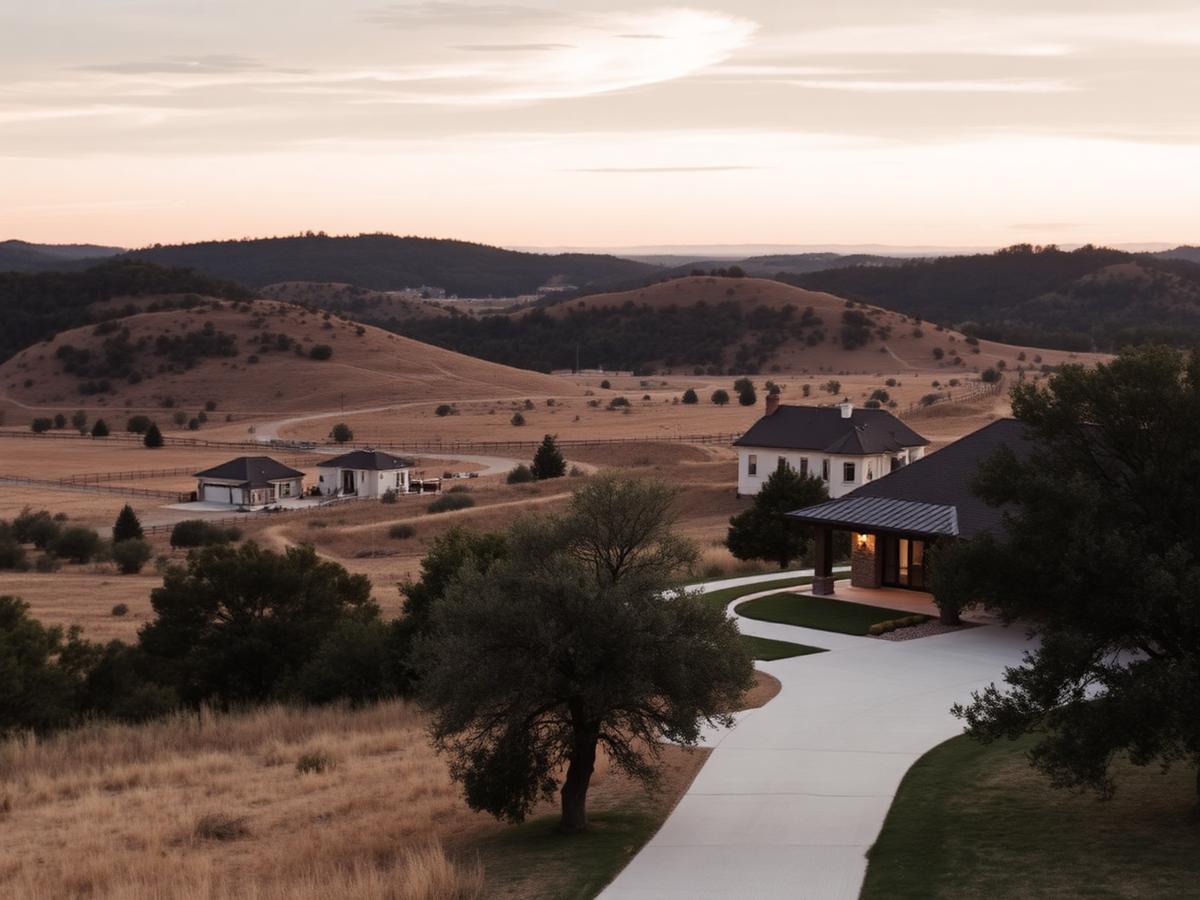
The land itself divides the city. West of the center, the terrain rises into Hill Country, with golf-course sections, gated areas, varied lot sizes, and a mix of production and custom homes. North and east, the ground flattens and the subdivisions get larger and more uniform.
Leander sits at the end of the MetroRail Red Line, which is unusual for a city this far from downtown Austin. The station area and the Northline development around it are being built as a walkable town center, and that project is ongoing rather than finished.
Because so much has been built so recently, district questions matter here. Many communities sit inside municipal utility districts or public improvement districts, and some addresses with Leander mail sit outside the city limits. Confirm the jurisdiction, the combined tax rate, and the school assignment for the specific property.
Explore by area
The main parts of Leander.
These are high-level search areas rather than legally defined boundaries. They are meant to help you narrow down where to look first.
Central Leander
Older neighborhoods, municipal services, local businesses, and development surrounding the original city center.
Typical housing: Older homes on varied lots, plus 1990s and 2000s subdivisions
Neighborhood guides coming soon
- Old Town Leander
- Horizon Park
- North Creek
- Mason Creek
Crystal Falls and West Leander
Hill Country terrain with golf-course sections, gated areas, varied lot sizes, and a mix of production and custom homes.
Typical housing: Semi-custom and custom homes, larger and irregular lots, some acreage
Neighborhood guides coming soon
- Crystal Falls
- The Highlands at Crystal Falls
- The Fairways
- Travisso
- Grand Mesa
North Leander
Substantial new-home development with newer schools and commercial growth, and access continuing toward Liberty Hill.
Typical housing: Current production construction in large phased communities
Neighborhood guides coming soon
- Bryson
- Bar W Ranch
- Northline
- Larkspur
- Devine Lake
South and Southeast Leander
Established subdivisions with access toward Cedar Park, commuter routes, and proximity to retail and employment corridors.
Typical housing: 1990s to 2010s subdivisions, generally uniform lot sizes
Neighborhood guides coming soon
- Block House Creek
- Lakeline Ranch
- Sarita Valley
- Deerbrooke
Transit-Oriented Development
The area around the Leander MetroRail station, where the Northline development is building a mixed-use town center with housing, retail, and public space.
Typical housing: Higher-density housing, townhomes, and apartments alongside retail
Neighborhood guides coming soon
- Northline
- Leander Station area
Northline is being built in phases. Completion dates, tenant mix, and rail schedules change, so treat published timelines as plans rather than commitments.
Housing
What kinds of homes will you find?
Most Leander housing was built after 2000, and a substantial share after 2015. That means newer systems, current building practices, and floor plans oriented around open living areas, but also relatively young trees and neighborhoods still filling in.
The western Hill Country sections break that pattern. There you find semi-custom and custom homes on larger and often irregular lots, with terrain and views that production subdivisions do not offer.
Townhomes and condominiums are a small share of the market, concentrated near the transit area and newer commercial corridors. Apartments have grown quickly along the main corridors, and single-family leases are available in most of the larger communities.
The Census Bureau reports a 73.4 percent owner-occupied rate and a $506,200 median value for owner-occupied units for 2020 to 2024. That is a citywide figure across a wide range of housing, not a price for any particular home or neighborhood.
New construction
Large phased communities north and east, with several builders active at once.
Established homes
Older housing near the city center and 1990s to 2000s subdivisions to the south.
Larger lots and acreage
West of the center, in the Hill Country sections and along the edges.
Luxury properties
Custom and semi-custom homes in the western golf-course and gated sections.
Lock-and-leave options
Townhomes and higher-density housing near the transit area and newer corridors.
Rental opportunities
Single-family leases in the larger communities plus newer apartment developments.
New construction
New construction in Leander
New construction is central to the Leander market rather than a side category. The heaviest activity is north and east of the city center, in large phased communities where multiple production builders work at the same time.
Custom and semi-custom construction concentrates in the western Hill Country sections, where lots are larger and terrain shapes what can be built.
Builder incentives here change frequently and often depend on using a preferred lender or on inventory homes that need to close within a set window. Ask about the specific home and date rather than relying on an earlier advertisement.
Municipal utility districts and public improvement districts are common in the newer communities. They affect the tax rate and can add assessments on top of homeowner association dues. Ask for the current combined rate and the district documents before comparing a new home to a resale.
Talk with Alyssa before you register at a builder's model home. Buyer representation and how it is compensated should be discussed in advance, since builder registration policies can limit representation after a first unaccompanied visit.
Getting around
Access and everyday travel
Major roads
- US 183 and the 183A tollway, the primary route southeast toward Austin
- Ronald Reagan Boulevard, running north toward Liberty Hill and Georgetown
- FM 2243 and FM 1431, the main east-west connectors
- SH 45 toll, reached to the southeast, connecting toward MoPac and I-35
Transit
- The Leander MetroRail station, the northern terminus of Capital Metro's Red Line into downtown Austin
- Park-and-ride facilities at the station
Worth knowing
- Travel time varies substantially by time of day, construction, and the specific neighborhood.
- Rail schedules are set by Capital Metro and change; check current timetables rather than assuming service levels.
- Road capacity here has been expanding alongside the population, so travel patterns shift as projects finish.
Daily life
What is nearby?
Not every home is close to every one of these. Where you land inside the city changes what is a short trip and what is not.
Parks and outdoor recreation
- Devine Lake Park
- Robin Bledsoe Park
- Benbrook Ranch Park and its trail connections
- Nearby access to the Balcones Canyonlands National Wildlife Refuge
Shopping and groceries
- Retail along US 183 and the 183A corridor
- Newer grocery anchors serving the northern communities
- Nearby regional retail in Cedar Park
Dining and entertainment
- Local restaurants near the original city center
- Newer dining along the main corridors
- The developing Northline town center
Medical facilities
- Ascension Seton Williamson and Baylor Scott and White facilities in the surrounding area
- Local clinics and urgent care along the corridors
Major employment areas
- Growing local commercial corridors
- Employment in Cedar Park and northwest Austin
- The technology corridor along US 183 toward Austin
Cultural and civic destinations
- Leander city facilities and the public library
- Community events near the original city center
- Nearby venues and civic destinations in Cedar Park
Schools
School districts and boundaries
These public school districts serve portions of Leander or the commonly associated postal area. School assignments vary by address and can change. Buyers should verify current attendance zones directly with the applicable school district.
- Leander ISD
- Liberty Hill ISD
- Lago Vista ISD
- Georgetown ISD
Neighborhoods
Start exploring Leander
Individual guides are published as they are written, so each one has something useful in it. Ask about any of these in the meantime.
West Leander
Crystal Falls
Large Hill Country community with golf-course sections, varied lot sizes, and a mix of builders.
- Hill Country
- Varied lots
Guide coming soon
West Leander
Travisso
Hillside community with elevation changes, custom and semi-custom homes, and long views in parts.
- Semi-custom
- Hill Country
Guide coming soon
North Leander
Bryson
Newer master-planned community with amenity areas and continuing builder phases.
- New construction
- Master-planned
Guide coming soon
North Leander
Larkspur
Newer community north of the city center with several builders and phased releases.
- New construction
- Amenity center
Guide coming soon
South Leander
Block House Creek
Established community with 1990s and 2000s homes and mature landscaping.
- Established homes
- Mature trees
Guide coming soon
Southeast Leander
Deerbrooke
Newer community near the Cedar Park boundary with production-builder homes.
- Newer construction
- Cedar Park access
Guide coming soon
North Leander
Bar W Ranch
Master-planned community on the north side, developed in phases with varied plans.
- Master-planned
- New construction
Guide coming soon
Transit area
Northline
Mixed-use development near the MetroRail station, still being built in phases.
- Mixed use
- Transit area
Guide coming soon
For buyers
Is Leander a fit for your search?
Leander tends to fit buyers who want newer housing, planned amenities, and either Hill Country terrain or rail access. It fits less well if you want mature neighborhoods with older trees and a settled feel, because much of the city is still filling in.
What tends to work well
- A large supply of newer homes with current systems and warranties
- Hill Country terrain and larger lots on the west side
- MetroRail access into downtown Austin from the Leander station
- Expanding retail, dining, and commercial services inside the city
Practical considerations
- Municipal utility and improvement districts are common and affect the tax rate
- Ongoing construction affects traffic patterns and nearby land use
- Newer neighborhoods have young landscaping and limited shade
- Some Leander mailing addresses sit outside the city limits
- Builder inventory nearby competes directly with resale homes
For sellers
Selling a home in Leander
In a market with this much new construction, your competition is not only other resale homes. Builder inventory in the same or a neighboring community, plus whatever incentives builders are offering that month, shapes how your home should be priced and presented.
Builder and floor plan matter to buyers here because plans repeat. Lot position, elevation, greenbelt backing, and orientation often separate two otherwise similar homes.
Homes on the west side are priced by different comparable sales than homes in the northern production communities. Terrain, lot size, and view are real value factors there.
Tax rate, district assessments, and school boundary belong in the pricing conversation. An automated online estimate is not an appraisal and does not account for any of this.
FAQ
Questions about Leander
Plan your search
Get the Leander home search guide
A practical starting point for comparing neighborhoods, housing options, new construction, and the questions to ask before choosing an area.
Community information was last reviewed on July 2026. School boundaries, commute times, pricing, availability, tax rates, and development plans can change. Verify anything that matters to your decision with the applicable city, county, school district, or provider. Questions about a specific address? Call Alyssa at 512.922.3540.