
Central Texas community guide
Living in Austin, Texas
Travis, Williamson, and Hays counties · The center of the region
Austin is less a single market than a collection of smaller areas. Housing, street patterns, lot sizes, and access change block by block, and the fastest way to narrow a search is to start with the part of the city, not the listing.
A practical introduction to the housing, neighborhoods, amenities, and different parts of Austin.
At a glance
- 1 million+
- Estimated population inside Austin city limits, 2026 estimate release
- Central
- Position in the region. Most surrounding cities are measured from here
- Multiple
- Public school districts serve portions of the city, current boundaries
Source: Editorial note
Understanding Austin
One city, several different ways to live.
Austin extends into Travis, Williamson, and Hays counties and includes dozens of neighborhood planning areas, reporting areas, ZIP codes, and school attendance zones. The City maintains official planning and mapping resources, but the neighborhood names people use every day do not always line up with those official boundaries. Two houses a mile apart can sit in different planning areas, different districts, and sometimes different school systems.
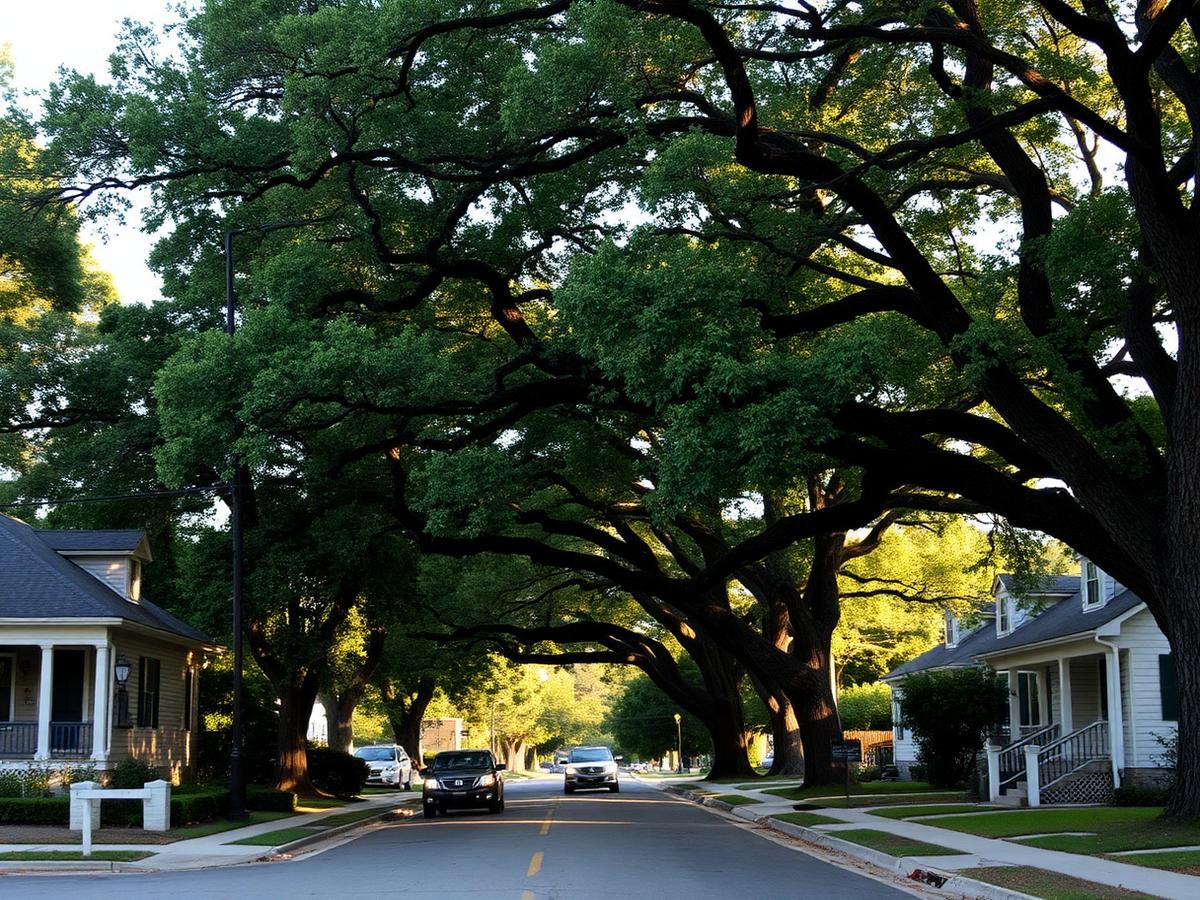
The clearest difference is age of construction. Central and near-east neighborhoods were largely built before 1970, with smaller lots in some areas and unusually deep lots in others, mature trees, and homes that have often been renovated more than once. Farther out, subdivisions from the 1980s through today follow a different pattern: larger floor plans, garages facing the street, planned green space, and homeowner associations.
Access shapes value here as much as square footage does. Interstate 35, MoPac, US 183, Loop 360, and the tollways all run in specific directions, and the river and greenbelts limit east-west movement in several places. A neighborhood that looks close to an employment center on a map may connect to it poorly, and a neighborhood farther out may connect very well.
Some property near Austin carries an Austin mailing address while sitting outside the city limits, in the extraterritorial jurisdiction, or inside a separate municipality. That affects city services, permitting, and tax rates. It is worth confirming for any specific address rather than assuming.
Explore by area
The main parts of Austin.
These are high-level search areas rather than legally defined boundaries. They are meant to help you narrow down where to look first.
Central Austin
Older housing on established street grids, close to downtown employment, with historic districts, condominiums, and generally higher land values.
Typical housing: Pre-1970 homes, renovations and teardowns, condominiums, some new infill
Neighborhood guides coming soon
- Downtown
- Clarksville
- Old West Austin
- Tarrytown
- Pemberton Heights
- Bryker Woods
- Rosedale
- Hyde Park
- North University
- West Campus
North Austin
A broad mix of older residential neighborhoods, technology employment corridors, apartments, condominiums, and ongoing redevelopment along the major corridors.
Typical housing: 1950s to 1980s homes, newer apartments and condominiums, scattered redevelopment
Neighborhood guides coming soon
- North Shoal Creek
- Crestview
- Brentwood
- Allandale
- North Burnet
- Wells Branch
- Gracywoods
- Scofield Farms
Northwest Austin
Hill Country terrain with established subdivisions, newer luxury construction, employment access along the tollways, and communities extending toward Lake Travis.
Typical housing: 1980s to 2000s subdivisions, custom homes, newer luxury sections
Neighborhood guides coming soon
- Great Hills
- Northwest Hills
- Jester Estates
- River Place
- Steiner Ranch
- Four Points
- Canyon Creek
- Anderson Mill
South Austin
Older ranch-style neighborhoods, newer infill on older lots, entertainment corridors, greenbelt access, and development continuing toward Hays County.
Typical housing: 1960s to 1980s ranch homes, modern infill, newer subdivisions farther south
Neighborhood guides coming soon
- Bouldin
- Travis Heights
- Zilker
- Barton Hills
- South Congress
- South Manchaca
- Circle C
- Shady Hollow
East Austin
Historic neighborhoods, substantial newer infill, industrial conversions, and large master-planned development farther east. Central east Austin and the areas beyond the tollway are very different markets.
Typical housing: Early to mid-century homes, modern infill, new master-planned sections
Neighborhood guides coming soon
- East Cesar Chavez
- Holly
- Govalle
- Mueller
- Windsor Park
- University Hills
- Easton Park
- Austin's Colony
West and Southwest Austin
Hill Country terrain, greenbelts, larger homes in many sections, established higher-value neighborhoods, and access shaped heavily by Loop 360 and MoPac.
Typical housing: Custom and semi-custom homes, larger lots, established luxury sections
Neighborhood guides coming soon
- Westlake
- Rollingwood
- Lost Creek
- Barton Creek
- Travis Country
- Oak Hill
- Circle C
- Spanish Oaks
Westlake and Rollingwood are separate municipalities, even though they are commonly discussed as part of the broader Austin market. City services, taxing entities, and permitting differ there.
Housing
What kinds of homes will you find?
Austin has housing from nearly every building era of the last century. Bungalows and cottages from the 1920s through the 1940s sit near the center. Ranch-style homes from the 1950s through the 1970s fill much of north, south, and near-east Austin. Subdivisions from the 1980s onward ring the city, and the newest large-scale construction is concentrated to the east, southeast, and northwest.
Condominiums and townhomes cover a wide range, from downtown high-rise units to small two-unit condominium regimes carved out of older central lots. Those small regimes look like single-family homes but carry shared-ownership documents worth reading carefully.
Luxury rentals exist both downtown and in newer suburban communities, and the inventory turns over quickly. Custom construction concentrates west of MoPac and along the lake, while production builders dominate the newer eastern and southeastern communities.
Because the eras and lot patterns differ so much, a single citywide average tells you very little. Two homes with the same square footage in different parts of Austin can be entirely different purchases.
Established homes
Pre-1980 construction across central, north, south, and east Austin, often renovated.
New construction
Concentrated east, southeast, and northwest, plus infill on older central lots.
Lock-and-leave options
Downtown and central condominiums, townhomes, and small condominium regimes.
Larger lots and acreage
Found mostly at the western and southwestern edges of the city and beyond.
Luxury properties
Established west Austin neighborhoods, lakefront areas, and downtown towers.
Rental opportunities
Luxury leases downtown, in northwest Austin, and in newer planned communities.
New construction
New construction in Austin
New construction in Austin takes two very different forms. Inside the older parts of the city it is mostly infill: one older home replaced by one or two new ones, or a small condominium regime on a single lot. Farther out, especially southeast and east, it is large subdivision development by production builders with model homes, phased releases, and inventory homes that are already underway.
Custom builders work primarily in the west and southwest, where terrain, tree preservation, and impervious cover rules affect what can be built. Production builders publish incentives that change from month to month and community to community, so it is better to ask what is available on the day you are shopping than to rely on anything advertised earlier.
New homes in outlying areas may sit inside a municipal utility district or public improvement district. Those affect the tax rate and, in some cases, add assessments on top of homeowner association dues. Ask for the current rate and the district documents before you commit.
If you plan to tour or register with a builder, talk with Alyssa first. Buyer representation and how it is compensated should be settled before you sign a builder registration, because some builder policies limit representation after your first visit.
Getting around
Access and everyday travel
Major roads
- Interstate 35 (north to south, through the center of the region)
- MoPac / Loop 1 (a parallel north-south route west of I-35)
- US 183 and the 183A tollway (northwest to southeast)
- Loop 360 / Capital of Texas Highway (through the western hills)
- SH 45, SH 130, and SH 71
Transit
- Capital Metro bus service across much of the city
- MetroRail Red Line, connecting downtown north toward Leander
Worth knowing
- Travel time varies substantially by time of day, construction, and the specific neighborhood. Treat any single number you read online as a snapshot, not a fixed fact.
- East-west movement is limited in several parts of the city by the river, the greenbelts, and the terrain. Two neighborhoods can be close in distance and far apart in practice.
- Austin-Bergstrom International Airport sits southeast of downtown, which makes the eastern and southeastern parts of the city the closest to it.
Daily life
What is nearby?
Not every home is close to every one of these. Where you land inside the city changes what is a short trip and what is not.
Parks and outdoor recreation
- Zilker Park and Barton Springs Pool
- The Ann and Roy Butler Hike-and-Bike Trail around Lady Bird Lake
- The Barton Creek Greenbelt
- Walnut Creek and the northern greenbelt system
- Lake Austin and Lake Travis access on the western edge
Shopping and groceries
- The Domain in north Austin
- Barton Creek Square in southwest Austin
- South Lamar and South Congress retail
- Neighborhood grocery anchors across most residential areas
Dining and entertainment
- Downtown and the Rainey Street district
- East Sixth and East Austin
- South Congress and South First
- Burnet Road and North Loop
Medical facilities
- Dell Seton Medical Center at The University of Texas, downtown
- St. David's and Ascension Seton hospital campuses across the city
Major employment areas
- Downtown and the Capitol complex
- The Domain and North Burnet
- The northwest technology corridor along US 183 and Loop 360
- Southeast Austin near the airport
Cultural and civic destinations
- The University of Texas at Austin
- The Texas Capitol and state government campus
- The Blanton Museum of Art and the Bullock Texas State History Museum
Schools
School districts and boundaries
These public school districts serve portions of Austin or the commonly associated postal area. School assignments vary by address and can change. Buyers should verify current attendance zones directly with the applicable school district.
- Austin ISD
- Round Rock ISD
- Leander ISD
- Pflugerville ISD
- Del Valle ISD
- Eanes ISD
- Lake Travis ISD
Neighborhoods
Start exploring Austin
Individual guides are published as they are written, so each one has something useful in it. Ask about any of these in the meantime.
Central Austin
Tarrytown
Established central neighborhood west of MoPac with older homes, mature trees, and extensive renovation activity.
- Established homes
- Larger lots
Guide coming soon
Central Austin
Hyde Park
One of Austin's oldest planned neighborhoods, with early-century houses on a walkable grid near the university.
- Historic homes
- Walkable grid
Guide coming soon
North Austin
Crestview
Mid-century homes on regular lots, with newer infill and access to the Burnet Road corridor.
- Mid-century
- Infill
Guide coming soon
East Austin
Mueller
A redeveloped former airport site with mixed housing types, parks, and a town-center retail area.
- Planned community
- Mixed housing
Guide coming soon
East Austin
Windsor Park
Ranch-style homes from the 1950s and 1960s, with a mix of original and updated houses.
- Established homes
- Ranch style
Guide coming soon
Southwest Austin
Circle C Ranch
A large southwest master-planned area with several sections built over multiple decades.
- Master-planned
- Newer construction
Guide coming soon
Northwest Austin
Steiner Ranch
Hill Country subdivision between Lake Austin and Lake Travis with varied sections and lot sizes.
- Master-planned
- Hill Country
Guide coming soon
South Austin
Travis Heights
Older homes on hilly, irregular lots just south of the river and east of South Congress.
- Historic homes
- Central access
Guide coming soon
South Austin
Barton Hills
Mid-century homes bordering the Barton Creek Greenbelt with direct trail access.
- Mid-century
- Greenbelt access
Guide coming soon
Southeast Austin
Easton Park
Large newer master-planned community with ongoing phases from multiple production builders.
- New construction
- Master-planned
Guide coming soon
For buyers
Is Austin a fit for your search?
Austin can work well if you want choice. The range of housing eras, price points, and settings inside one city is unusual. It is a harder market if you need certainty quickly, because two similar-looking homes can carry very different costs and constraints.
What tends to work well
- Housing from nearly every era, in urban, suburban, and Hill Country settings
- Employment centers spread across the city rather than concentrated in one place
- Extensive parks, greenbelts, and trail access in most parts of town
- Both established neighborhoods and large-scale new construction, depending on where you look
Practical considerations
- Property taxes and the specific taxing entities vary by address
- Older homes may need foundation, plumbing, electrical, or tree work
- Traffic patterns and east-west access differ sharply from one area to another
- Some addresses sit outside the city limits or inside a separate municipality
- Impervious cover, tree ordinances, and permitting rules affect what can be built or added
For sellers
Selling a home in Austin
A citywide average will not price your home. In Austin, value depends heavily on the specific street, the lot, the age and condition of the house, and what has actually sold nearby in recent months.
Renovation history matters here more than in newer markets. A 1958 home with an updated foundation, replaced systems, and a reworked floor plan competes differently from one that is largely original, even on the same block.
In parts of the city where new construction is active, your home is also competing with builder inventory and builder incentives. That competition changes by quarter and by community.
An online automated estimate is not an appraisal and is not a pricing strategy. A local review looks at your actual comparable sales, your tax rate, your school boundary, and what is currently available to buyers near you.
FAQ
Questions about Austin
Plan your search
Get the Austin home search guide
A practical starting point for comparing neighborhoods, housing options, new construction, and the questions to ask before choosing an area.
Community information was last reviewed on July 2026. School boundaries, commute times, pricing, availability, tax rates, and development plans can change. Verify anything that matters to your decision with the applicable city, county, school district, or provider. Questions about a specific address? Call Alyssa at 512.922.3540.